To be listed on the CAMPOSOL TODAY MAP please call +34 968 018 268.
Guidelines for submitting articles to La Manga Club Today
Hello, and thank you for choosing La Manga ClubToday.com to publicise your organisation’s info or event.
La Manga Club Today is a website set up by Murcia Today specifically for residents of the urbanisation in Southwest Murcia, providing news and information on what’s happening in the local area, which is the largest English-speaking expat area in the Region of Murcia.
When submitting text to be included on La Manga Club Today, please abide by the following guidelines so we can upload your article as swiftly as possible:
Send an email to editor@lamangaclubtoday.com or contact@murciatoday.com
Attach the information in a Word Document or Google Doc
Include all relevant points, including:
Who is the organisation running the event?
Where is it happening?
When?
How much does it cost?
Is it necessary to book beforehand, or can people just show up on the day?
…but try not to exceed 300 words
Also attach a photo to illustrate your article, no more than 100kb
PROPERTY SEARCH
article_detail
Date Published: 08/09/2026
Look up: The great bird migration to Africa is now filling the skies over Murcia
ARCHIVED ARTICLE -
Storks, kites, bee-eaters and eagles are among the birds crossing the Region on ancient routes towards Africa
One of nature’s great annual journeys is underway, with thousands of birds crossing the Region of Murcia as they head south towards Africa.
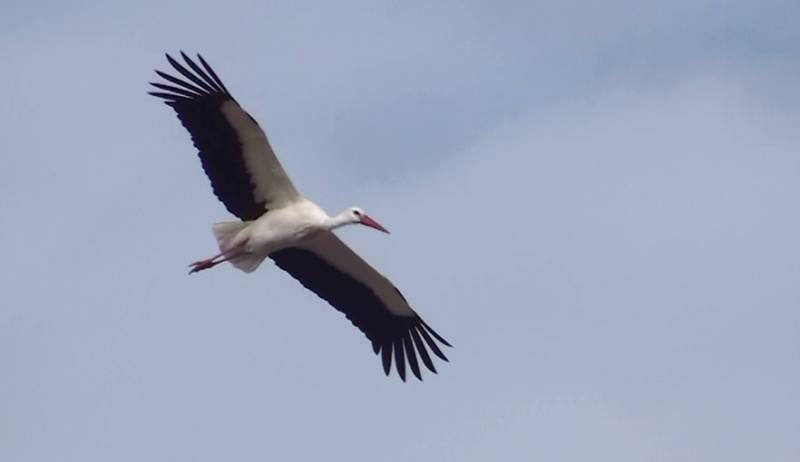
White storks can be seen circling above the recently harvested fields of the Altiplano, while bee-eaters pass overhead in groups and black kites use rising warm air to gain height without wasting precious energy. Swallows, house martins, short-toed eagles and rollers are also among the many species making their way south.
Although September is traditionally associated with bird migration, the biggest movement of the year actually gets underway much earlier. The post-breeding migration begins from around mid-July, with both adult birds and young born during the spring and early summer setting off on their journey.
For the younger birds in particular, this is their first major migration and one of the biggest journeys they will ever make.
The birds don't simply fly in a straight line towards the Strait of Gibraltar. They follow what ornithologists describe as invisible aerial highways, established routes that generations of birds have used to cross the Iberian Peninsula.
The Region of Murcia is an important part of these routes, with birds travelling across areas including the Altiplano, the Northwest and the Guadalentín Valley. Along the way, they need places to stop, feed and recover their energy before continuing south.
Wetlands, rice fields, ponds, cereal fields and other open areas can all provide vital rest stops. That makes the loss or alteration of these habitats a particular concern during migration, as birds rely on familiar places that may have been used for generations.
The scale of the movement becomes even clearer when the birds reach the Strait of Gibraltar. During the final week of August alone, the Migres programme recorded more than 54,000 black kites, almost 28,000 white storks and more than 11,000 European honey buzzards crossing the Strait.
For some of the birds passing over Murcia, Africa is still a long way away. Many will continue across the Strait and on towards the Sahel and other parts of sub-Saharan Africa, while others will spend the winter in North Africa or further south in Spain.
The journey isn't without its dangers. Power lines, habitat loss and a shortage of suitable places to rest can all pose problems for migrating birds, although conservationists and environmental workers continue efforts to reduce the risks.
For now, however, the spectacle is happening right above us. As storks circle over the Altiplano, bee-eaters sweep across the countryside and birds of prey ride the warm air currents southwards, the Region is playing its part in one of the planet's great natural journeys.
You just have to look up to see it.
Image: BirdingInSpain / Wikimedia Commons, CC BY-SA 3.0